- What it is
- A full-stack web app where people in prison request books, prison staff approve or deny them, and people outside pay for the approved ones.
- Why I made it
- It was my SWEN 261 team project at RIT, and one of my first times building a big app with several kinds of users.
- What I did
- I worked with Liam Pennino, Nina Sagawa and Selene Shen on both the Angular front end and the Spring Boot back end. We split up the features and made them fit together, with no AI.
- How it turned out
- It all worked by the final presentation, with at least 91% test coverage on every part of the back end, plus notifications we added on top of the requirements.
The details
Working as a team
This was a really fun project because the four of us had to work on both sides of a big system together. I worked with Liam Pennino, Nina Sagawa and Selene Shen. We split features between the Angular front end and the Spring Boot back end, and then had to make sure everything fit together.
It was real practice at dividing up work, reading other people's code, and building features that depended on a teammate's part. We didn't use any AI on it.
Three kinds of users
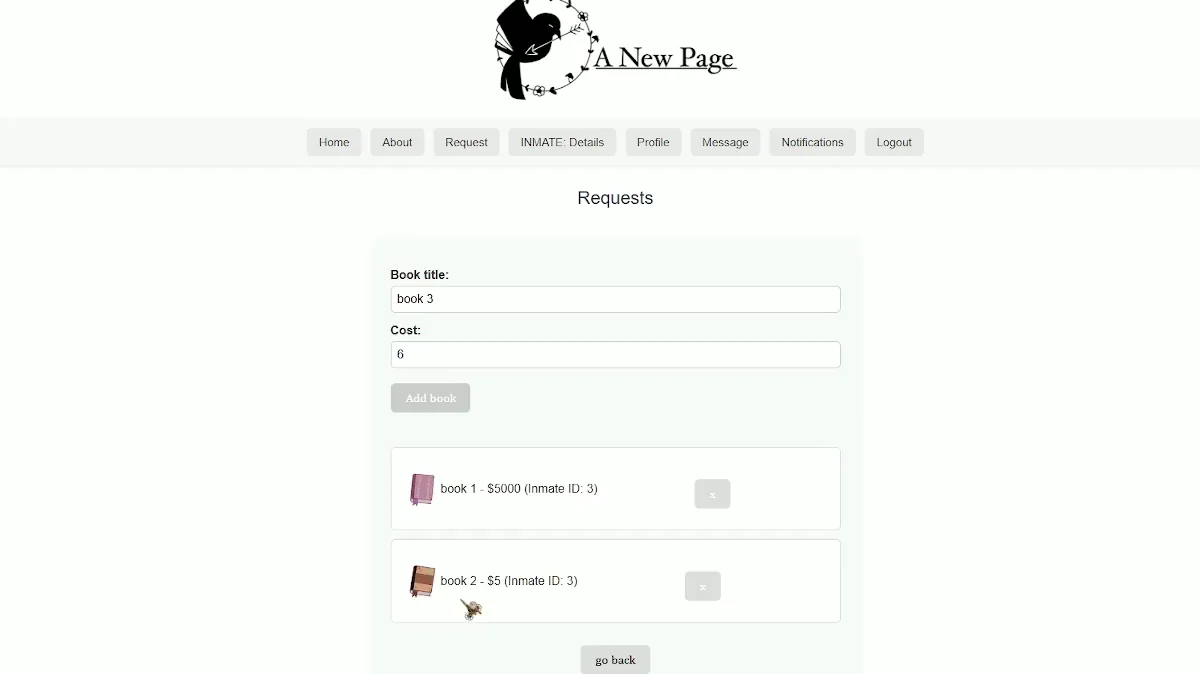
Inmates request books. Admins review those requests and approve or deny them with a message. Helpers browse the approved books, add them to a basket and check out (the payment was simulated). Each step sends the inmate a notification, which was one of the features we added on top of the requirements.
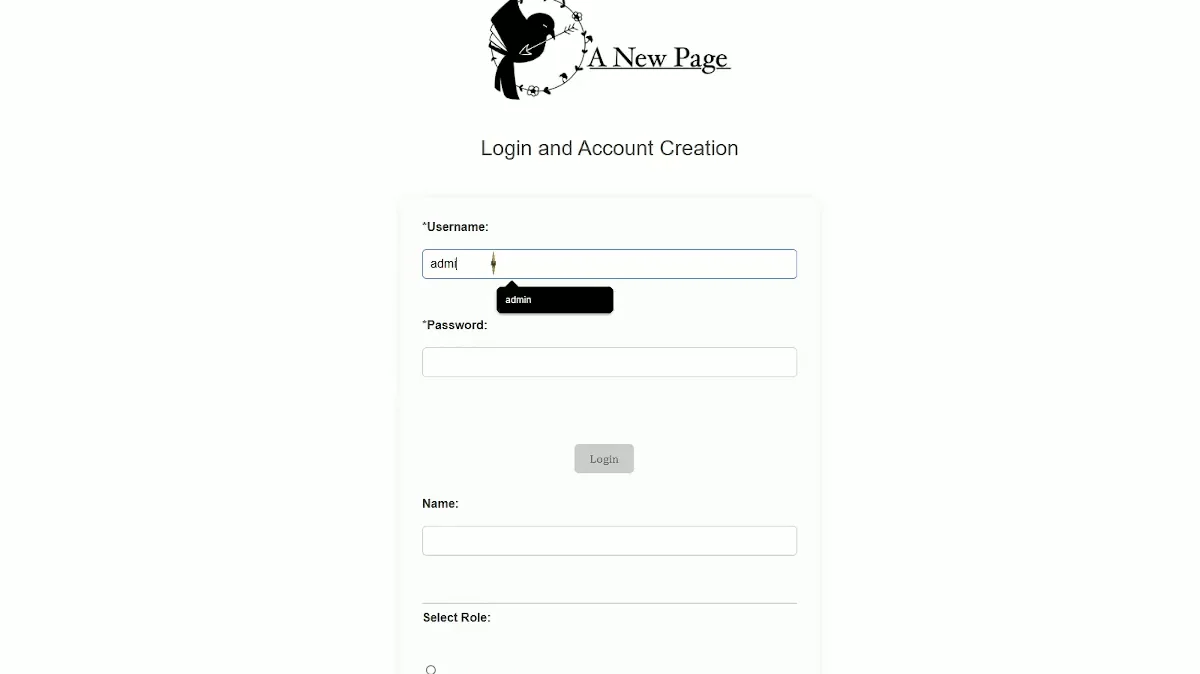
Logging in or making an account. 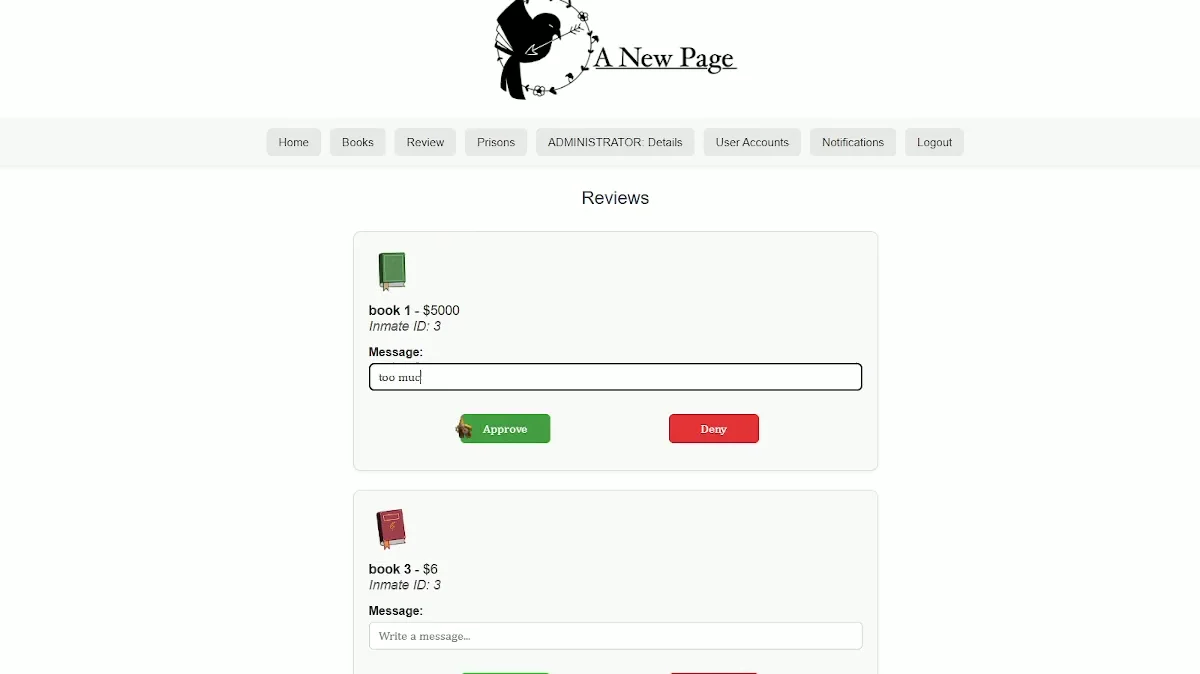
An admin reviewing book requests. 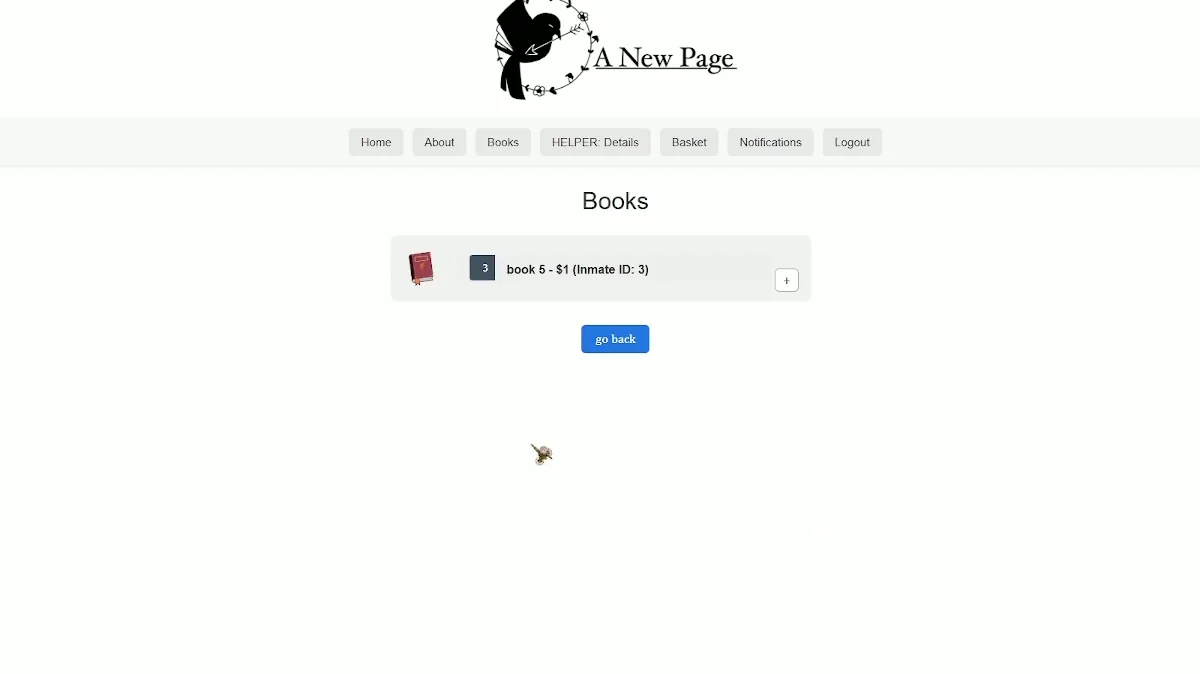
Approved books, ready for helpers. 
A helper's basket before checkout.
How we built it
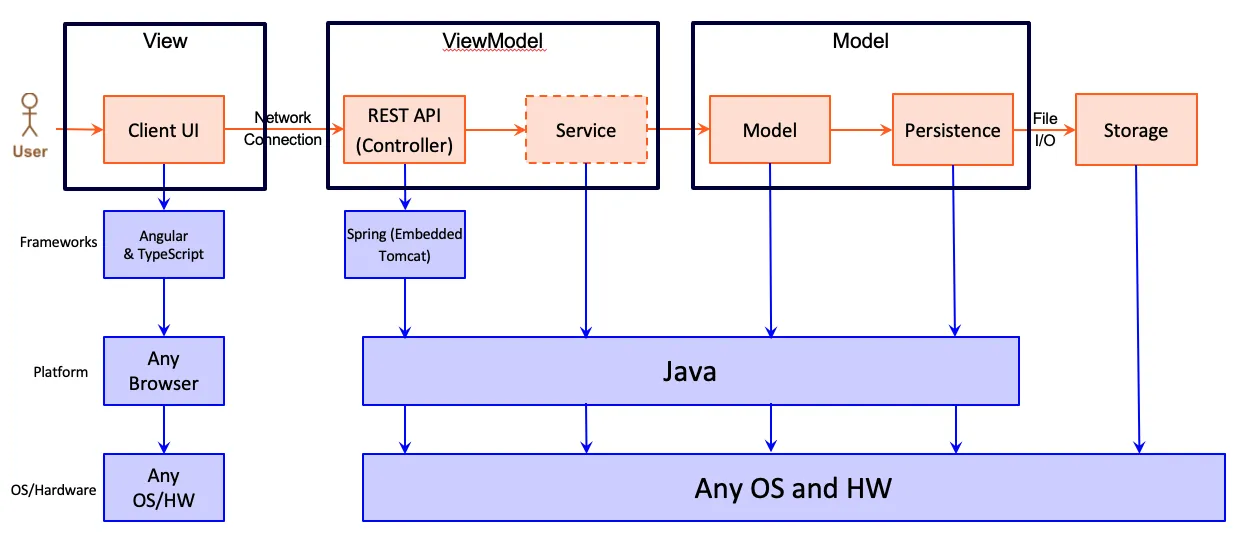
The back end is Java and Spring Boot, split into controllers, data access and models, and it saves everything to JSON files. The front end is Angular, with a page and a set of routes for each kind of user.
One request, start to finish
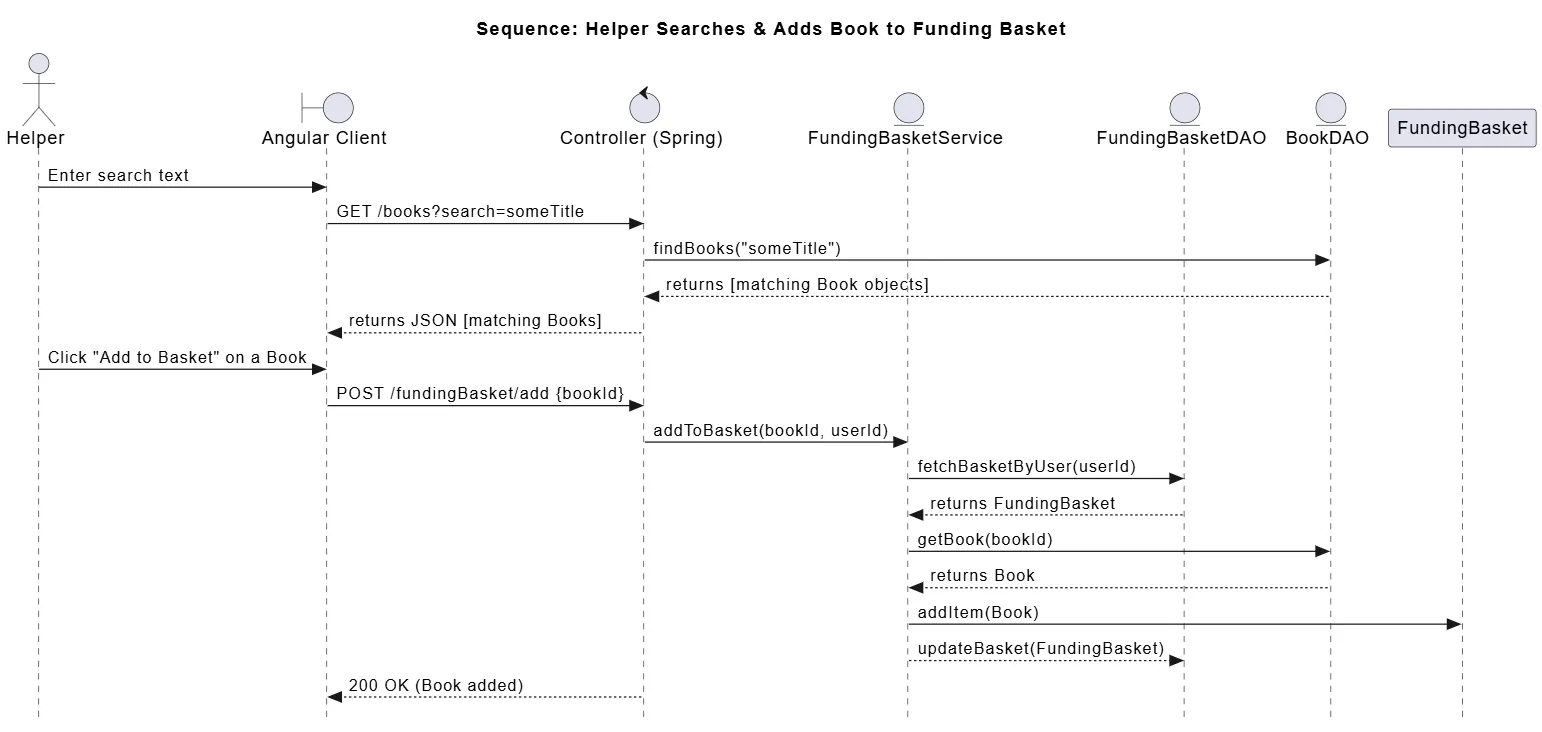
This diagram follows a helper searching for a book and adding it to their basket, from the Angular app, through the Spring controller and services, to the saved data and back.
Testing
We tested with JUnit, in the browser, and with curl. By the final presentation every part of the back end had at least 91% test coverage. We also ran SonarQube and went through what it found, and we listed the issues we'd clean up next.